Go-to-market plan · Wonderful Singapore · Hong Liang → Alexander Kleinberg

Fifteen accounts. Every AI strategy researched. Revenue first, always.

A working plan — who I am, which accounts I’d open first and the dollar case behind each one, and a 90-day path to the first lighthouse in production.

Hong Liang June 2026 Working plan, not a pitch

01 / Who I am

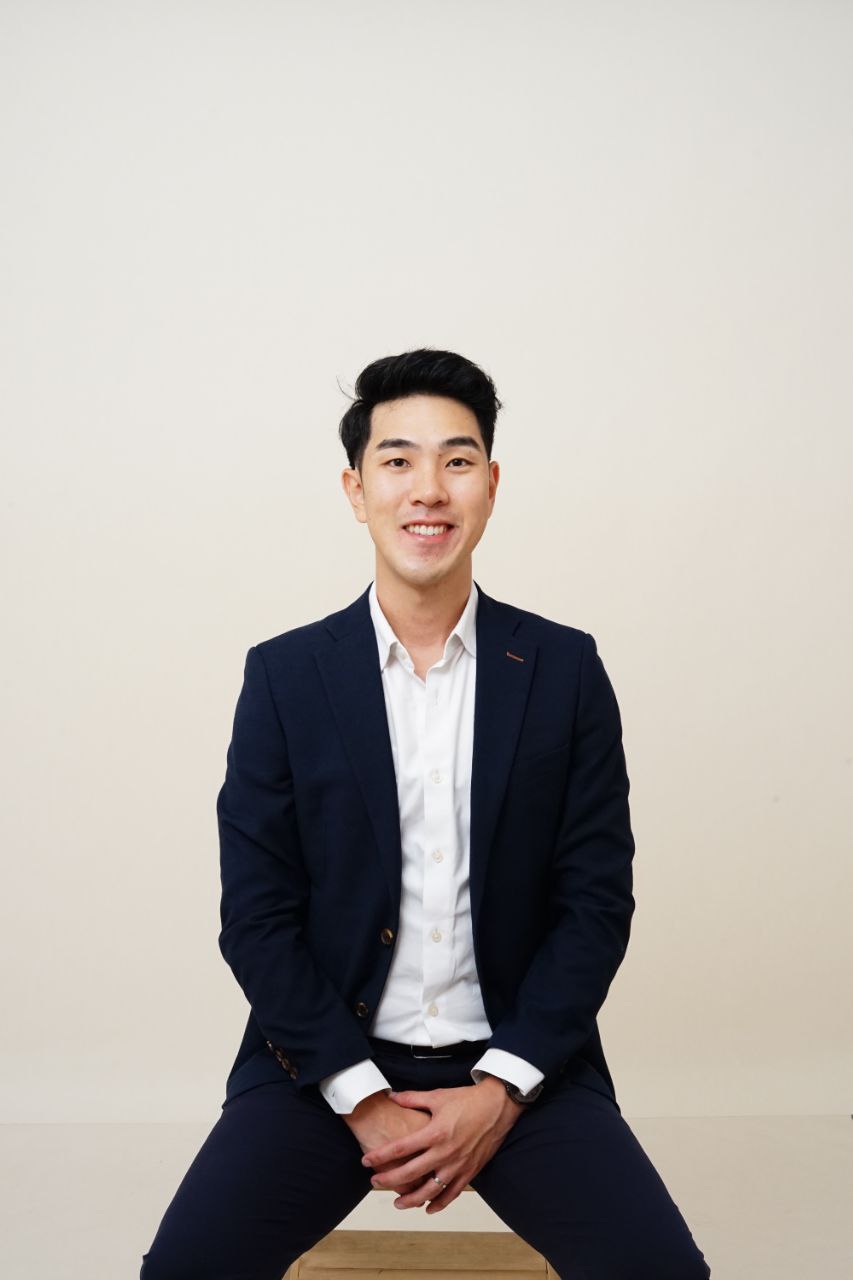
Six years closing enterprise transformation deals at Salesforce — including several of the companies on this list.

Hong Liang

Hong Liang

Enterprise Account Executive · Singapore

I’ve spent six years at Salesforce Singapore selling enterprise AI, automation, and SaaS into a number of the accounts on this plan, and across similar industries throughout the Philippines, Malaysia, and Indonesia.

My Salesforce coverage has been Comms, Telco, Retail, and Media. What I bring to Wonderful is the motion: multi-year transformation deals, SI co-selling alongside global systems integrators, CxO relationships built over years, and the ability to get hands-on technically when no SE is in the room.

Current role
Enterprise AE, Salesforce Singapore · Comms, Telco, Retail & Media
Quota track record
115% of quota FY26 (co. avg 60%) · 80% FY25 (co. avg 50%)
Deal profile
Multi-year transformation deals · SI co-selling (global SIs) · CxO engagement
AI & automation
Service Cloud & AI positioning · generative AI & automation into enterprise CX
Education
NTU · MSc Technopreneurship & Innovation (Dean’s List) · BEng EEE (Dean’s List) · Georgia Tech exchange
Volunteering
Engineering Good (2020–23): built automation increasing laptop refurbishment throughput 500%, supporting 4,000+ students

02 / The first fifteen

Seven verticals, fifteen accounts — ranked by the revenue a CEO can see.

Every account is already on an AI journey. The gap is always the same: pilot in, production missing. The map below plots each account on how strategically vital the agent is to their own business — revenue, cost, or mission — against how fast we can get a production proof live. Accounts with a named AI vendor are the fastest to open: they’ve proved willingness and already found what their first vendor can’t do.

DAYS 0–60 · OPEN FIRST MISSION-CRITICAL · FAST TO PROVE MISSION-CRITICAL · LONGER CYCLE USEFUL · FAST LOGO WINS USEFUL · SEED & WAIT Strategic value to the customer’s business mission-critical ↑ ↓ useful, not vital Time to first production proof ← weeks (fast lane) months / quarters → strategic value = revenue or cost saved + how vital the agent is to the business 1 Prudential +S$30–80M 1 Great Eastern incl. in #1 3 DBS S$70–140M 3 OCBC incl. in #3 3 UOB incl. in #3 8 CPF Board strategic · national scale 8 HDB incl. in #8 2 Singtel +S$20–50M 2 StarHub incl. in #2 6 Singapore Airlines +S$20–50M 6 Changi Airport incl. in #6 4 FairPrice +S$25–50M 5 Grab +S$25–60M 7 IHH Healthcare S$8–20M
Prudential Great Eastern DBS OCBC UOB CPF Board HDB Singtel StarHub Singapore Airlines Changi Airport FairPrice Grab IHH Healthcare
#
Account
Why this account, why now
Use case · AI strategy · gap
Proof Wonderful has done it
Business case
1
Insurance
Prudential · Great Eastern
Prudential: Global AI Lab in SG backed by MAS & EDB; Google Cloud partnership; 100+ use cases across 24 markets. Focus: agent productivity, real-time guidance. Gap: all lab — nothing production-wired into advisor workflow.
Great Eastern: GERICA advisor chatbot deployed; SVP Digital Transformation on-staff. Pilot stage — no production agentic system.
Largest revenue pool in financial services after banking. Lapse is a CEO-level number — every percentage point of persistency retained is S$10–20M in a S$1B in-force book. Prudential’s AI Lab is fully funded and looking for a production partner, not another POC.
Advisor distribution & persistency agent — lead-to-policy conversion and lapse prevention across policy admin, CRM, and the advisor portal. The AI lab gives us a funded, technically sophisticated buyer already convinced of the use case. We bring the production capability they don’t have.
Bank Hapoalim
Savings campaign agent · Israel
88% voice containment · 100k customers · ~40k interactions/month · live in 3 weeks by 1 in-house engineer. Proof that an agent can acquire and convert, not just deflect.
+S$30–80M
5% persistency lift on S$1B in-force = S$50M/yr in premiums retained. Advisor productivity adds 10–20% new policy conversion on top.
↑ Revenue
2
Telecom
Singtel · StarHub
Singtel: Signed Sierra (Mar 2026, $15B) for inbound chat “Shirley” — 70k cases, 73% resolved without human. Gap: Sierra is inbound chat only. No outbound voice sales, no retention/churn agent, no upsell-on-diagnosis flow.
StarHub: Haptik chatbot (NPS −40→+10, wait times halved). Cloud-first with Infosys Compaz. Gap: rule-based, no voice, no agentic motion.
Singtel just proved willingness by signing Sierra. That’s not a threat — it’s the fastest opening in the market. Sierra does inbound chat. The outbound voice + upsell + retention motion is the lane Sierra structurally can’t fill. Entry via McKinsey, who maps telco ARPU and churn levers, or via Google Cloud as a joint go-to-market.
Retention, diagnostics & proactive upsell on one voice flow — service and revenue on the same call. We enter with what Shirley can’t do: outbound churn-save, fault-diagnose-and-upsell voice, proactive upgrade offer triggered by the support interaction itself.
Telefónica
EMEA carrier · voice + WhatsApp
91.5% containment · <2 min calls · −50% AHT vs previous AI · ×2.5 volume scale, NPS held. The answer to every “will quality suffer?” objection.

Bezeq
ISP · 5M+ users
−40% call duration · 75% first-attempt resolution · +15% CSAT. Diagnosed after evaluating 12+ vendors.
+S$20–50M
1% churn reduction on ~S$1.5B SG consumer revenue = S$15M retained ARPU/yr. Proactive upsell on the same call adds 5–10% ancillary revenue per resolved interaction.
↑ Revenue · ↓ Cost
3
Banking
DBS · OCBC · UOB
DBS: 2,000+ AI models across 430+ use cases, ~S$1B economic value (FY2025), DBS Joy GenAI corporate bot, named World’s Best AI Bank. Note: DBS deliberately de-risked unsecured consumer lending in 2025. Gap: Joy is corporate FAQ; no agentic outbound collections or cross-sell voice agent on the consumer book.
OCBC: First bank globally to deploy GenAI for all employees; agentic KYC (10 days → 1 hr); GenAI for 900 wealth advisors (Apr 2026). Gap: all internal. Customer-facing agentic collections and cross-sell absent.
DBS and OCBC are the most AI-mature banks in the region — they already believe, have budget, and have internal AI teams looking for a production partner. DBS pulled back on unsecured lending in 2025, so the collections pitch is sharper at OCBC and UOB, or reframed at DBS around cross-sell and wealth-conversion voice rather than pure recovery. Entry via McKinsey / QuantumBlack, who already model these flows with the banks’ own data.
Collections recovery & cross-sell — vernacular reminders, hardship handling, next-best-offer agent in English, Mandarin, Malay, Tamil. The two gains compound: +44% promise-to-pay multiplied by +19% promises kept = +72% cash recovered per contact. Open after the first in-country reference is live.
Banco Caja Social
Colombian bank · collections · full retail portfolio
45%→65% promise-to-pay · 31%→37% paid · +72% net cash recovered · −33% AHT · 43,658 calls in 3 weeks · live in 19 days.
S$70–140M
Additional cash recovered/yr on DBS-scale unsecured book (~S$6B). Same +72% uplift applied to SG early-stage (1–90 DPD) collections. ~1–2% of group net profit from one workflow.
↑ Revenue (cash recovery)
4
Grocery retail
NTUC FairPrice Group
Multi-year Google Cloud deal (Store of Tomorrow, Aug 2025) — Gemini Smart Carts, Google Agentspace for staff. Salesforce Einstein chatbot deflecting 80% of CS cases. 1.7M app users, 2.4M Link Rewards members. Gap: in-store and ticket-deflection AI excellent; no voice or conversational agent on loyalty servicing and cart recovery.
Singapore’s largest retailer at ~S$3.7B group revenue and 35% food-retail market share, 500k+ daily customers, 570+ touchpoints, and a 2.4M Link Rewards base with zero proactive voice or conversational layer. Google covers in-store; Salesforce covers tickets. The loyalty and cart-recovery agent is the white space between them. Entry via Google Cloud as a joint go-to-market — Wonderful runs on Google infrastructure.
Cart abandonment recovery & Link Rewards engagement agent — personalised re-engagement on abandoned baskets, loyalty tier nudges, and promotional offers across app, chat, and voice. Lowest integration complexity of any high-value account.
Banco Caja Social
Outbound conversion agent · proactive contact
Same proactive outreach pattern as cart recovery: agent initiates, reads the situation, drives conversion. 65% conversion on outbound contact, 6,000 contacts/day.
+S$25–50M
1–2% basket uplift on ~S$3.7B group revenue (FPG is Singapore’s largest retailer, 35% market share) via personalised prompts + loyalty nudges. Cart recovery on 1.7M app users recovers 5–10% of abandoned baskets.
↑ Revenue
5
Super-app / digital native
Grab Holdings
AI Centre of Excellence (SG); 1,000+ AI models; GrabX 2026 — 13 AI features (Apr 2026); Driver AI Assistant + AI Merchant Assistant built with OpenAI & Anthropic (Apr 2025). $2.8B revenue, $4.0–4.1B guided 2026. Gap: strong partner and internal AI; no production agentic voice agent on consumer CX or subscriber retention at scale.
Grab built its last two AI products with Anthropic — Wonderful runs on Claude. That’s the partnership angle: extend what they’re already building, with the one capability Anthropic doesn’t provide (production voice deployment at enterprise scale). Entry via the Anthropic partnership or via McKinsey, who advises Grab on platform strategy.
GrabUnlimited subscriber retention & driver-partner support agent — proactive churn-save on subscription cancellation signals, driver earnings coaching at volume, and merchant onboarding support. 50M+ monthly transacting users, consumer voice support still largely ticket-based.
OTE Group
Hellenic Telecom · voice agents
50% deflection (3× baseline) · 77% containment · −30% AHT · 1m30s avg handling time. Subscriber retention at volume — same motion as GrabUnlimited churn-save.
+S$25–60M
2% churn reduction on GrabUnlimited subscribers + driver-partner support deflection saving ~S$8–15M in support ops. SG GMV (rides + food) ~S$1.5–2B; retention agent protects repeat-purchase base.
↑ Revenue · ↓ Cost
6
Travel & hospitality
Singapore Airlines · Changi Airport
SIA: Salesforce Agentforce + OpenAI partnership (Mar 2025); Qualtrics CX analytics (Jul 2025). Gap: Agentforce = case management and agent assist. No real-time voice on IRROPS rebooking or ancillary upsell — exactly the high-value, time-pressure use case.
SIA is the most visible premium brand in the market, travels across APAC, and has just proved its willingness to buy agentic AI by signing Salesforce. The gap is specific and known: Agentforce is a case-management tool. Real-time voice under IRROPS pressure is not what it does. Entry via Salesforce as a complementary deployment or via McKinsey aviation practice.
Booking conversion & IRROPS recovery agent — real-time rebooking, ancillary upsell (seat upgrade, lounge, hotel), and KrisFlyer loyalty servicing under time pressure in multiple languages. The premium multilingual showcase that travels APAC.
Telefónica
Voice + WhatsApp · ×2.5 volume scale
91.5% containment · NPS held during highest volume months. If it holds at telco scale, it holds during an IRROPS event. Multilingual, high-pressure, real-time — same brief.
+S$20–50M
IRROPS affect millions of SIA passengers/yr. Proactive rebooking + ancillary attach (5–10% on disrupted passengers) vs reactive call centre: S$20–50M+ annual revenue recovery. CSAT improvement protects the premium loyalty base.
↑ Revenue
7
Healthcare
IHH Healthcare
Both investing in digital health and patient-experience platforms. No production agentic voice on appointments or triage. MOH-governed — separate compliance track from MAS.
An efficiency story more than a revenue story, which is why it sits below the revenue accounts. But it’s the fastest build-to-replicate because we have a direct proof at exactly this use case and scale. The Maccabi reference alone opens the door. Entry via MOH / Synapxe (the national health IT agency).
Patient access & throughput — appointment booking, triage, postnatal follow-up. Repeatable build; the Maccabi Healthcare proof de-risks it completely. Platform compounds on itself with each deployment.
Maccabi Healthcare
240k interactions · 6 weeks · 2M+ members
Voice + chat across multiple patient journeys. Live in 90 days. The most direct proof-to-use-case match on the list.
S$8–20M
IHH SG ~3M outpatient visits/yr. 25% call deflection at S$8–12/call = S$6–9M cost saved. Proactive appointment reminders reduce no-shows, recovering S$2–8M in slot revenue.
↓ Cost · ↑ Access
8
Public sector
CPF Board · HDB
Singapore AI Strategy 2.0 explicitly calls for agentic AI in citizen services. CPF handles ~20M member interactions/yr. HDB manages citizen enquiries across BTO applications, resale transactions, grants, and maintenance for 1M+ households — all multilingual, high-volume, under-automated. GovTech and HDB already deployed SmartCompose (LLM email tool) and the AskJudy chatbot, and are trialling commercial AI chatbots (Wiz.AI) in their call centre. Gap: everything is internal-facing or basic chatbot — no production agentic voice agent on citizen-facing enquiries. Long procurement cycle: 12–24 months.
The longest cycle on the list but the highest strategic value: a CPF or HDB reference is a trust signal that opens every regulated account in the region. HDB is particularly compelling because they are already AI-curious — GovTech has been their partner since 2023. Entry via the GM’s GovTech / IMDA network. Start the clock now — the conversation needs to begin in this 90-day window or it misses the FY27 budget cycle.
Multilingual citizen-service agent — scheme servicing and account queries in English, Mandarin, Malay, Tamil, fully governed. The strategic prize is the reference itself: proof that an agent can run at national scale, governed, in all four languages — the credential that de-risks every other regulated buyer.
OTE Group + Telefónica
High-volume multilingual · governed
Both carriers serve millions of interactions in multiple languages under regulatory oversight. The closest structural analogue to a national citizen-service agent.
Strategic — not yet quantified
Deliberately not given a revenue or cost range. The value is the trust halo: a CPF or HDB reference is the credential that opens every regulated buyer in the region. An indicative cost-saving floor (deflection at S$5–8/contact across ~25M+ combined interactions) runs into the tens of millions, but the strategic positioning is the point, not the operating saving.
★ Strategic / trust halo
×
Commodity deflection
— every vendor —
Every hyperscaler pitches this. Won on price in a free-POC bake-off. Routes to IT. No CEO in the room.
Generic FAQ / Tier-1 deflection. The front door every vendor opens. We don’t lead here.
S$1–3M cost saving at best. Commoditised.
Don’t lead

Revenue and cost figures are illustrative unit-economics estimates for the conversation, not confirmed account data. Banking recovery case derived from Wonderful’s published Banco Caja Social result (+72% = 45→65% PTP × 31→37% kept). All other figures based on public revenue disclosures, analyst estimates, and author assumptions. Replace with real account data before showing externally.

03 / The first ninety days

Accounts, sequence, and gates — FDE bench guarded the whole way.

Two fast-to-proof lanes first, first lighthouse into production under three weeks, banking and digital-native opened on its back. Every gate is production, not a POC.

Days 0–30
Open the two fastest-to-proof lanes
Gate: two paid proof-of-production agreements signed. Pre-agreed metrics, contractual scale trigger. No free POCs.
Prudential Great Eastern Singtel StarHub
  • Singtel first for speed. They signed Sierra in March for inbound chat. Sierra doesn’t do outbound voice sales or retention — that’s our lane. Enter with what Shirley can’t do, not against what it already does. Entry via McKinsey (who maps their ARPU and churn levers) or via Google Cloud as a joint deployment on shared infrastructure.
  • Insurance first for value. Prudential has a fully funded, MAS-backed AI Lab with 100+ use cases proposed and nothing in production. Great Eastern is at chatbot stage. Open the distribution head on the Hapoalim proof — revenue campaign live in 3 weeks by one in-house engineer. That’s the persistency story they want to build but haven’t wired yet.
  • Sell altitude: distribution head, retention GM — not the AI lab whose job is to evaluate forever.
  • Entry via hyperscalers and McKinsey — Google Cloud has a co-sell relationship with several of these accounts. McKinsey / QuantumBlack provides the boardroom relationship and the revenue model that makes the business case credible before we walk in.
Days 30–60
First lighthouse live — open banking and digital-native
Gate: one agent in production (19-day playbook); DBS or OCBC engaged on the S$70–140M recovery math.
DBS OCBC UOB Grab FairPrice
  • Ship the first reference following the Caja Social / Hapoalim 19-day pattern. The reference is the asset; everything else waits on it.
  • Open banking with the in-country proof. DBS has 2,000+ AI models but no agentic collections voice agent. OCBC has agentic KYC internally but nothing customer-facing in the consumer book. Take them the S$70–140M recovery math plus a live Singapore reference. Entry via McKinsey / QuantumBlack, who already run the collections analytics for these banks.
  • Grab as the digital-native parallel. Grab built its last two AI products with Anthropic — Wonderful runs on Claude. Open through that existing partnership: we extend what they’re building with the production voice layer Anthropic doesn’t provide.
  • FairPrice as the fast loyalty logo. Google covers in-store; Salesforce covers ticket deflection. Enter via Google Cloud co-sell on the loyalty and cart-recovery agent gap. Lowest integration complexity of any account.
  • Productise every integration into a reusable skill. The second build is faster; the bench isn’t re-spent.
Days 60–90
2–3 lighthouses live — chain the vertical, seed the long bets
Gate: 2–3 in production, first scale trigger converted, CPF / HDB clock started.
Singapore Airlines Changi IHH CPF Board HDB
  • Convert the scale triggers — proof-of-production into full contracts where metrics cleared the bar.
  • Open SIA on the Agentforce gap. They signed Salesforce in March 2025 for case management. Real-time voice on IRROPS rebooking is not what Agentforce does. Entry via Salesforce (complementary deployment) or McKinsey aviation practice. Premium APAC showcase logo.
  • Healthcare as the repeatable build. Maccabi proof de-risks completely. Enter via MOH / Synapxe (national health IT). Platform compounds on each deployment.
  • Seed the public sector now. CPF / HDB procurement is 12–24 months. The conversation needs to start in this window or it misses FY27 budget. HDB is already AI-active through GovTech — a warm entry. Strategic clock starts here.
  • Protect the bench: qualify hard, walk from accounts only collecting POCs.

04 / Appendix — the math behind every business case

Step-by-step workings, one account at a time.

Every figure in the table above is derivable from these inputs. All assumptions are stated and swappable. This is the working you’d use to defend any number in the room.

01 · Insurance · Prudential · Great Eastern

Persistency lift + advisor productivity → +S$30–80M

Estimated Singapore in-force life premiums bookPrudential SG + GE SG combined; not publicly disclosed at entity level — industry estimate
~S$2B
Annual lapse / surrender rate (industry average, SG life)MAS Insurance Statistics 2024; life lapse rates typically 6–10%
~8% = S$160M at risk
Persistency improvement from proactive advisor agentConservative 3–5% lift; AIA reported 15% cross-sell improvement from AI personalisation in 2025
3–5% of S$160M
Premiums retained from lapse prevention alone
S$5–8M/yr
Advisor productivity uplift on new businessHapoalim proof: same platform, conversion agent live in 3 weeks. If advisor closes 10–20% more policies on same pipeline, at avg new premium ~S$3k/policy across ~100k active advisors (Prudential + GE SG combined estimate)
+S$25–70M/yr
Total incremental revenue, conservative–base
S$30–78M
Key lever: the persistency agent calls policyholders before the lapse window, surfaces hardship options, and routes to the advisor for complex cases. The advisor productivity number assumes the agent pre-qualifies leads and automates follow-up, freeing each advisor for 2–3 more meaningful conversations per week. Both are directional — the real number needs Prudential’s own persistency data and pipeline conversion rates.
02 · Telecom · Singtel · StarHub

Churn save + upsell → +S$20–50M

Singtel Singapore consumer revenueSingtel FY2025 annual report; SG consumer segment
~S$1.5B
Annual postpaid churn rate (SG telco industry)IMDA Telecom Statistics 2024; SG postpaid churn ~1.5–2% per month = ~18–24% annualised
~20% = S$300M churning
Churn cases reachable by a proactive retention agentAssume agent contacts subscribers showing cancellation signals (contract end, support dissatisfaction) — ~15% of churning base
~S$45M reachable
Save rate from Bezeq-style retention agentBezeq: 75% first-attempt resolution; assume 30–40% of contacted at-risk subscribers retained
30–40% save rate
Revenue retained from churn save
S$13–18M/yr
Upsell attach on resolved service callsTelefónica proved upsell on same call; 5–10% attach rate on ~2M annual service calls at avg S$15 ARPU lift
S$1.5–3M/yr
AHT reduction cost saving−40% AHT (Bezeq) on ~5M annual calls at ~S$4/call fully-loaded agent cost
S$8M/yr
Total revenue + cost benefit
S$22–29M (conservative) → S$40–50M (base)
The upside case assumes StarHub included and upsell attach improves with personalisation. SG telco revenues are publicly reported; the model is sensitive to churn reach assumption.
03 · Banking · DBS · OCBC · UOB

Collections recovery → S$70–140M

Source result: Banco Caja Social (María, published)Wonderful published case study, June 2026
Verified
Promise-to-pay rate: human baseline → María
45% → 65%
Promises kept (actual payment): human → María
31% → 37%
Net cash recovered per 100 contacts: before → after100 × 45% × 31% = 13.95 → 100 × 65% × 37% = 24.05
13.95 → 24.05 = +72%
DBS-scale unsecured consumer book (cards + personal loans)DBS does not disclose card/unsecured sub-total; industry analyst estimate based on total consumer loan book ~S$40B, unsecured ~15%
~S$6B
Annual flow into early-stage delinquency (1–90 DPD)MAS financial stability report; SG unsecured NPL formation ~6–10% of book annually
~8% = S$480M
Current cure rate from human calling teamIndustry benchmark; SG banks typically cure 35–45% of early-stage delinquencies via outbound contact
~40% = S$192M recovered
Post-agent cure rate (same +72% uplift, capped at 69%)Capped: not all delinquencies are contactable; model assumes same 100 contacts but +72% more convert
~69% = S$331M recovered
Incremental cash recovered, DBS scale
+S$139M/yr on S$6B book → range S$70–140M
Important 2026 caveat: DBS publicly reduced unsecured consumer lending in FY2025, so the recovery pool at DBS specifically is shrinking — the flagship number is more defensible at OCBC/UOB, or reframed at DBS as cross-sell/wealth-conversion voice. Lower bound uses conservative cure assumptions; upper bound assumes full rollout. For OCBC (~S$4B book): same math gives S$46–93M. AHT saving (~−33%, S$1–2M) excluded from headline as it is 60–100× smaller. Avoided write-off / LGD not modelled — further upside excluded.
04 · Grocery retail · NTUC FairPrice Group

Basket uplift + cart recovery → +S$25–50M

FairPrice Group total revenueFPG Financial Report 2024; NTUC FairPrice Co-operative total revenue ~S$3.7B; 35% Singapore food-retail market share, 570+ touchpoints
~S$3.7B
App users with Link Rewards accounts (active)FPG stated 1.7M app users and 2.4M Link Rewards members as of mid-2025
1.7M app / 2.4M Link
Basket uplift from personalised offers and loyalty nudgesIndustry benchmark: personalised recommendation engines lift basket size 1–3%; applied conservatively to grocery portion of revenue (Salesforce Commerce Report 2025)
1–2% on grocery base = S$20–40M
Estimated online cart abandonment (FairPrice On)eCommerce industry avg cart abandonment ~70%; FPG online grocery est. S$100M+ GMV; recovering 5–10% of abandoned carts
S$3.5–7M recovered
Loyalty redemption uplift driving repeat visitsAgent proactively prompts near-expiry Link$ redemption; industry: 15–20% uplift in redemption frequency adds to basket frequency
Incremental; included in basket figure
Total incremental revenue
S$25–50M/yr
FPG is not a listed entity; exact financials are not publicly disclosed at granular level. Revenue and GMV estimates are from public statements and cooperative annual report summaries. The model is conservative — it does not include cross-sell into Kopitiam / Foodfare ecosystem or Link$ financial services tie-in with Trust Bank.
05 · Super-app · Grab Holdings

Subscriber retention + support deflection → +S$25–60M

Grab Group revenue (FY2024 actual / FY2026 guided)Grab 6-K filings; FY2024 $2.8B group revenue, FY2026 guided $4.0–4.1B
$2.8B (FY24) → $4.1B guided
Estimated Singapore GMV (rides + food delivery)SG is Grab’s home market; ~20–25% of group GMV estimated at SG; group GMV ~$20B
~S$1.5–2B SG GMV
GrabUnlimited subscribers in SingaporeNot disclosed; Grab reported strong subscription growth in SG; conservative estimate 400–600k active SG subscribers at ~S$14/month
~500k subscribers = ~S$84M ARR
Monthly churn on subscription baseSuperapp subscription benchmark; assume 2–3% monthly churn = ~25–36% annual
2–3% monthly
Revenue at risk from churn annually
~S$21–30M/yr
Retention agent save rate on cancellation-signal contactsOTE proof: 50% deflection, 77% containment on outreach. Assume 30–40% save rate on contacted at-risk subscribers
S$6–12M retained
Driver / merchant support deflection cost savingGrab has ~100k+ driver-partners in SG; support contacts est. 2M/yr; deflecting 40% at S$3/contact
S$2.4M cost saved
Indirect GMV protection from reduced driver churnDriver satisfaction & support quality linked to retention; 1% fewer drivers churning protects ~S$15–20M GMV capacity
S$15–20M GMV protected
Total direct revenue + cost benefit (conservative–base)
S$24–35M (direct) → S$40–55M (incl. GMV)
Grab financials are public (NASDAQ: GRAB). SG-specific revenue is not broken out at segment level; all SG figures are author estimates from group disclosures. Subscriber count is the most uncertain input — the model is sensitive to it. GMV protection is indicative and excluded from headline.
06 · Travel · Singapore Airlines · Changi Airport

IRROPS recovery + ancillary upsell → +S$20–50M

SIA passengers carried annuallySIA Group FY2025/26; SIA + Scoot record 42.4M passengers, +7.7% YoY, 90.6% load factor
42.4M passengers/yr
Estimated IRROPS-affected passengers (delay >1hr / cancellation)IATA 2024: ~15–20% of flights affected globally; conservative SIA estimate 10% of passengers
~4M passengers/yr
Passengers reachable by a proactive voice/chat IRROPS agentOnly contactable passengers with app / profile data; estimate 50% = 2M
~2M reachable
Ancillary attach rate on proactive IRROPS contactDisrupted passengers offered upgrade, lounge, or hotel voucher proactively; industry data: 5–10% uptake when personalised and offered in-moment
5–10% of 2M = 100–200k passengers
Average ancillary revenue per IRROPS upsellLounge access ~S$60, seat upgrade ~S$150, hotel voucher ~S$100; blended avg S$80
~S$80 avg
Incremental ancillary revenue
S$8–16M/yr
Cost saving: contact-centre deflection during IRROPSIRROPS events spike call centre volume 3–5×. An agent handling 60–70% of IRROPS contacts at est. S$8/call saves S$10–15M in peak surge costs
S$10–15M/yr
Loyalty / CSAT protection value (KrisFlyer)KrisFlyer ~3M members; disruption-handled-well retains premium customers worth S$1,500+ LTV; 1% retention improvement = significant indirect value. Excluded from headline.
Indicative upside; excluded
Total revenue + cost saving
S$18–31M (conservative) → S$40–50M (base incl. loyalty)
SIA financials are public (SGX: C6L). Ancillary revenue per passenger and IRROPS rates are industry benchmarks; SIA-specific data not disclosed. The bigger commercial prize is preventing KrisFlyer member defection to competitor carriers during IRROPS — not easily quantified but strategically material.
07 · Healthcare · IHH Healthcare

Call deflection + no-show reduction → S$8–20M

IHH Singapore outpatient visits annuallyIHH annual report 2024; Parkway hospitals (Gleneagles, Mount Elizabeth, Parkway East) in SG; est. ~3M outpatient visits/yr combined
~3M visits/yr
Inbound calls related to appointments, queries, remindersIndustry: ~0.8–1.2 calls per outpatient visit; est. ~3M calls/yr
~3M calls/yr
Agent deflection rateMaccabi Healthcare proof: voice + chat across multiple journeys, 2M+ members served; conservative 25–35% call deflection from human agents
25–35% = 750k–1.05M calls deflected
Fully-loaded cost per call (human agent, SG private healthcare)Private hospital CS agents: est. S$8–12/call incl. overhead
S$10 avg
Cost saved from deflection
S$7.5–10.5M/yr
No-show reduction via proactive appointment remindersSG private hospital no-show rate ~8–12%; proactive reminder agent reduces no-shows by 20–30%; average consultation revenue S$150–300/slot
S$1–3M recovered slot revenue
Total cost saving + revenue recovery
S$8.5–13.5M (conservative) → S$15–20M (base)
IHH Singapore financials partially disclosed; group results from IHH Healthcare Berhad (Bursa / SGX: Q0F). The case is an efficiency and patient-access story, not a margin story.
08 · Public sector · CPF Board · HDB

Citizen-service deflection → strategic value, not yet quantified

CPF Board member interactions annuallyCPF annual report 2024; ~20M member transactions / enquiries across all channels
~20M/yr
HDB citizen enquiries annually (BTO, resale, parking, grants, maintenance)HDB annual report / GovTech; est. 5–8M interactions/yr across all channels
~6M/yr est.
Combined interaction base
~25M/yr
Proportion routed to human agents (voice + chat)Industry: ~30–40% of government interactions still require agent involvement; est. 30% = 7.5M human-handled contacts
~7.5M human contacts/yr
Agent deflection rate from agentic AIOTE / Telefónica proof: 50–91% containment. Conservative government estimate: 30–40% deflection on suitable query types
30–40% = 2.25–3M calls deflected
Fully-loaded cost per government CS interactionPublic sector wage + overhead; est. S$5–8/interaction for public agency CS agents
~S$6 avg
Indicative cost floor (the case is strategic, not financial)
tens of S$M — value TBD
Why no headline S$ range: public agency financials are government budgets, not P&L, so a revenue or cost-saving figure would be false precision. The genuine value is strategic — a CPF or HDB reference is the single most powerful trust credential for opening every other regulated buyer in the region, which is why these accounts are positioned on strategic value, not on the revenue axis. The cost-saving floor (deflection at S$5–8/contact across ~25M+ combined CPF + HDB interactions) does run into the tens of millions, but we’d quantify it properly only once inside procurement. Languages: English, Mandarin, Malay, Tamil — all four national languages are a hard requirement and a moat against US-generic tools. Singapore AI Strategy 2.0 and the Digital Government Blueprint 2025 both name agentic citizen services a priority.
How the Banco Caja Social +72% is derived — the compounding that everyone misses

It’s not +44%. It’s +72%. Here’s the exact arithmetic.

Human baseline
Contacts made100
Promise-to-pay reached45%
Promises actually kept (paid)31% of 45%
Contacts → payment100 × 0.45 × 0.31 = 13.95
María — 6 weeks live
Contacts made100
Promise-to-pay reached65%
Promises actually kept (paid)37% of 65%
Contacts → payment100 × 0.65 × 0.37 = 24.05
Uplift in promise-to-pay (headline figure)
65/45 − 1 = +44%
Uplift in kept-promise rate (less-cited figure)
37/31 − 1 = +19%
Net uplift in cash actually recovered per contact1.44 × 1.19 = 1.714 → −1 = 71.4%
+72%
Why this compounds: every extra promise-to-pay now passes through a higher kept-promise rate too. The two improvements multiply, not add.
AHT improvement (same callers, more capacity)−33% AHT means the same calling team can reach ~49% more delinquent customers in the same time — a third multiplier if volume is the constraint
−33% AHT = +49% capacity
If capacity constraint is binding: effective uplift in total cash recovered
Up to +72% × +49% = +156% vs baseline
Source: Wonderful published case study “Banco Caja Social,” June 2026. All figures from the published article; no internal data used. The +72% figure in the accounts table is the conservative version — it assumes the same contact volume and doesn’t take credit for the AHT-driven capacity expansion.

All figures in this appendix are illustrative unit-economics models for interview preparation. They are built from: (a) Wonderful’s own published case study data (Banco Caja Social, Hapoalim, Bezeq, Telefónica, OTE Group, Maccabi), (b) public company filings and annual reports (DBS, OCBC, SIA, Grab 6-K), (c) publicly stated figures (FairPrice Group, Prudential AI Lab), and (d) industry benchmarks from IMDA, MAS, IATA, McKinsey where primary data is not available. Inputs marked as estimates should be replaced with real account data before any commercial use.

Let’s talk

Eight verticals. Fifteen accounts. Every AI strategy researched. A 90-day path to the first lighthouse.

Two questions to open with: which account do you want as the first lighthouse, and where do you want the forward-deployed bench pointed first?